
Updated June 2026
France’s Grandes Écoles are among the most prestigious higher education institutions in the world, offering international students a unique path into elite academic and professional networks.
Whether you are drawn to engineering, business, or political science, these schools combine academic rigor with real-world impact.
Key Takeaways
- Grandes Écoles are France’s most elite higher education institutions, comparable to the Ivy League or Oxbridge, and specializing in fields such as engineering, business, and political science.
- They are fundamentally different from standard French universities: smaller, more selective, career-focused, and often partly or fully taught in English.
- Admission is highly competitive. International students can apply directly through entrance exams, academic records, and interviews.
- You do not need to speak French to study at many Grandes Écoles. A growing number of programs are taught entirely in English, with admission based on IELTS or TOEFL scores.
- Most programs lead to a Master’s degree, recognized internationally through the LMD framework and ECTS credit system.
What is a Grande École?
A Grande École is a top-tier French higher education institution known for its selectivity, academic excellence, and strong links to industry and government.
Unlike standard universities, Grandes Écoles typically specialize in a single field, such as engineering, business, humanities, or political science. They are often compared to the Ivy League in the United States or Oxbridge in the United Kingdom, and they hold a similarly influential role in shaping France’s professional elite.
Quality standards across these institutions are upheld by the Conférence des Grandes Écoles (CGE), the national association that promotes and regulates excellence across the sector.
How are Grandes Écoles different from regular French universities?
Grandes Écoles and standard French universities are two separate systems, and the differences go well beyond prestige.
French public universities are open-access institutions: any student who holds a high school diploma or equivalent can enroll. Grandes Écoles, by contrast, select their students through competitive entrance exams or rigorous application processes, and accept only a small fraction of candidates each year.
In practice, the differences show up in several ways:
- Class size: Grandes Écoles typically have much smaller cohorts, which means more direct contact with faculty and a stronger alumni network per graduate.
- Specialization: Where a university covers a broad range of disciplines under one roof, a Grande École is often built around one field.
- Industry connections: Grandes Écoles have historically maintained close ties with major employers. Internships, company partnerships, and career integration are built into most programs.
- Tuition fees: Public universities in France charge low tuition fees set by the French government. Grandes Écoles, particularly private business schools, charge significantly more, with tuition fees typically ranging from €8,000 to €18,000 per year, depending on the institution and program.
Do I need to speak French to study at a Grande École?
No. A growing number of Grandes Écoles offer programs taught entirely in English, making them fully accessible to international students who do not speak French.
This is one of the most common misconceptions about studying in France. While French-language programs remain the majority, many leading Grandes Écoles have developed English-taught Bachelor’s and Master’s programs specifically designed for an international audience.
For English-taught programs, admissions teams typically ask for proof of English proficiency rather than French.
That said, learning some French while you are in France is always a practical advantage, both for daily life and for building local professional connections. Many schools offer French language courses as part of their international programs to help students settle in.
How does admission to a Grande École work?
Admission to a Grande École is highly competitive, and the path in depends on whether you are a French or international applicant.
For international applicants, many schools offer direct admission based on a combination of entrance exams, academic transcripts, language proficiency certificates and motivation interviews.
What degrees do Grandes Écoles offer?
Most Grande École programs lead to a Master’s degree, fully aligned with the international LMD framework (Licence, Master, Doctorate).
All programs use the European Credit Transfer and Accumulation System (ECTS), which ensures that your degree is internationally recognized and transferable. This makes it straightforward to continue studies or pursue career opportunities anywhere in the world.
In addition to Master’s programs in business, engineering, and political science, several Grandes Écoles now offer Bachelor’s programs designed specifically for international students, often taught entirely in English.
Are Grandes Écoles degrees recognized internationally?
Yes. Degrees from Grandes Écoles are highly respected by employers and academic institutions worldwide.
Many schools, particularly business schools, hold internationally recognized accreditations such as AACSB, EQUIS, and AMBA. Holding one or more of these accreditations is a strong signal of quality and places a school among the top institutions globally.
Beyond accreditation, Grandes Écoles actively participate in international partnerships, student exchange programs, and double-degree agreements, giving graduates a genuinely global academic experience.

What are the career outcomes for a Grande École graduate?
According to CGE’s 34th annual employment survey published in June 2026, 76% of Grandes Écoles graduates were in employment within 6 months of graduating
This strong employment record reflects the combination of rigorous academic training, practical skills development, and the leadership and analytical abilities that graduates bring to the workplace. Employers across sectors, from consulting and finance to engineering and public service, actively recruit from these institutions.

Which Grandes Écoles are the most well known?
France is home to several Grandes Écoles that consistently rank among the best institutions in the world, each with a distinct area of focus.
- Humanities & Sciences: École Normale Supérieure (ENS)
- Engineering: École Polytechnique
- Business: HEC Paris, IÉSEG School of Management
- Social Sciences & Political Science: Sciences Po
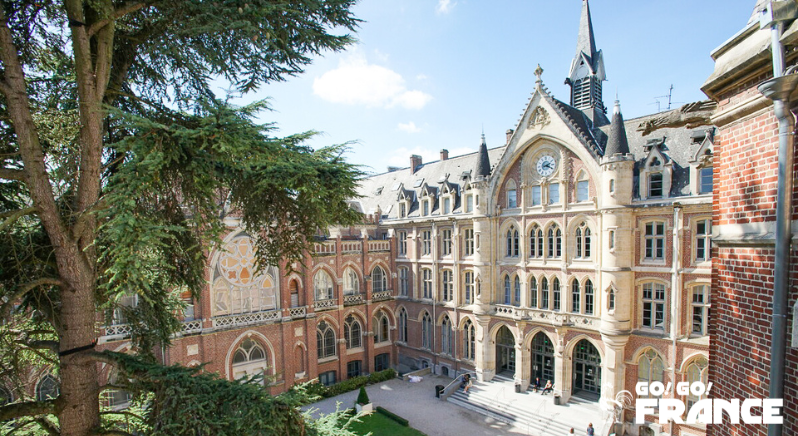
Go! Go! France is proud to partner with IÉSEG School of Management. With campuses in Lille and Paris, IÉSEG School of Management offers a Bachelor in International Business and a wide range of specialized Master’s programs in Management, Finance, Marketing, and more, all taught in English.
Contact us to learn more about applying to IÉSEG School of Management.